A consistent record
Incoming observations are checked and duplicate deliveries are filtered out. Reception time and arrival time are kept separately, preserving the context of each report.

Aviation intelligence, from the ground up
Better airfield insight starts with what’s happening around you.
CAVOK Nodes capture aviation signals locally. Pulse Server brings the observations together. The Console turns them into a live view of traffic and receiver health — with airfield displays and further integrations on the roadmap.
01 / The network
One receiver brings a local perspective. A network of receivers can build a richer picture of aircraft activity.
 Pulse ServerReceive · store · serve
Live traffic and network health today. Dedicated airfield displays are planned.
01 Receive aviation signals locally
02 Connect securely to the platform
03 Build insight across locations
02 / Meet the hardware
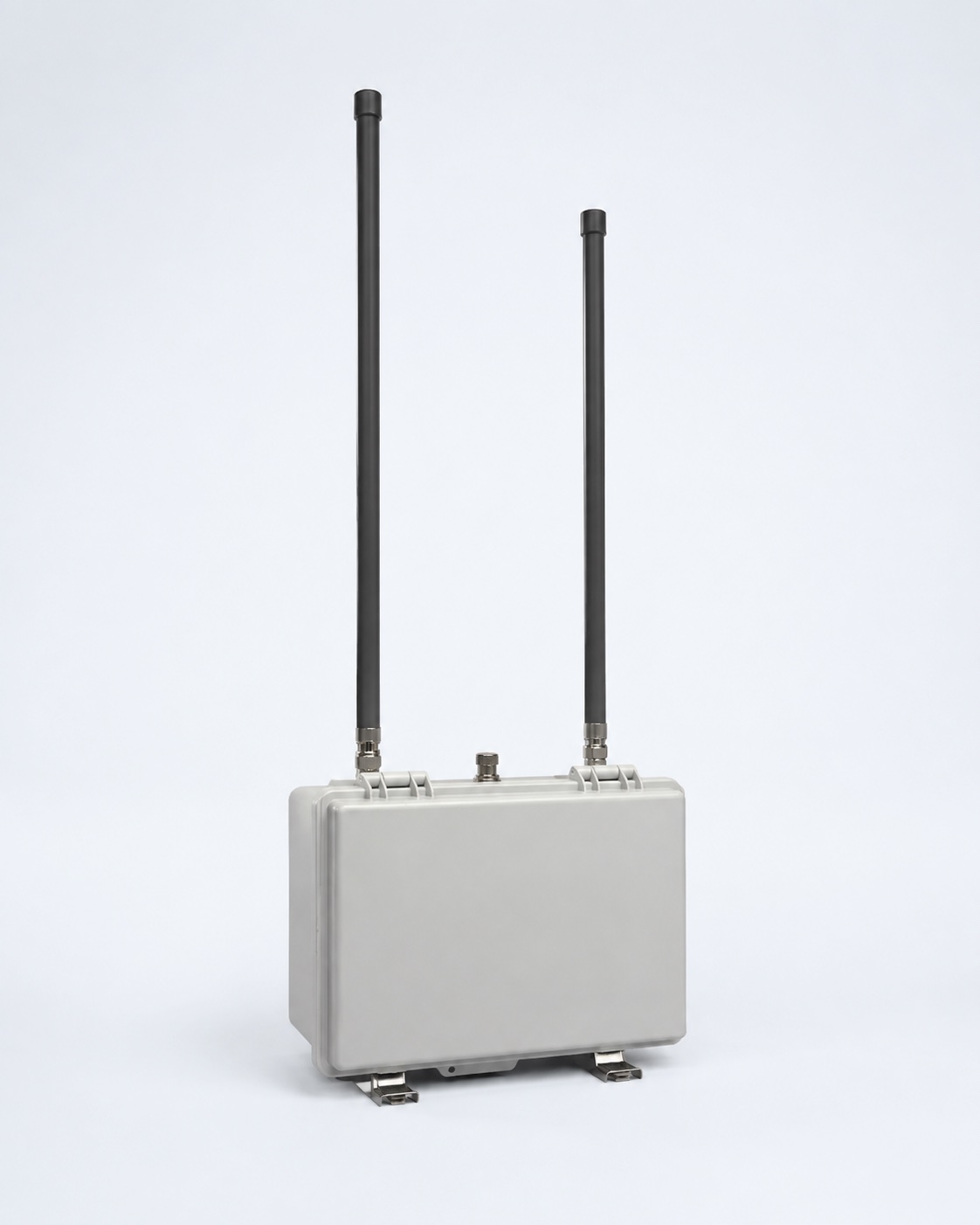
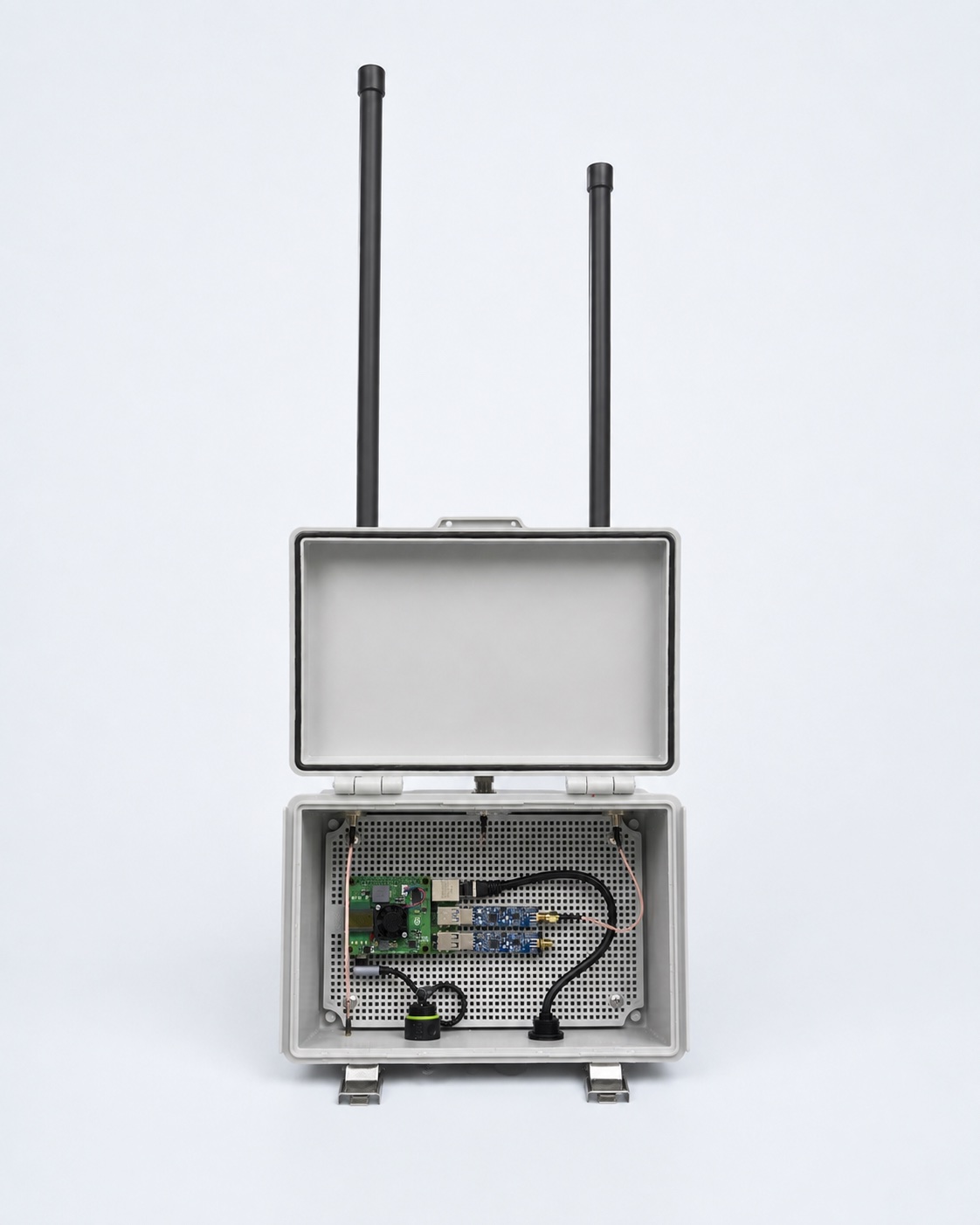
A dedicated aviation receiver, positioned where the activity happens.
The prototype combines Raspberry Pi computing, two radio receivers and a Power over Ethernet supply in one enclosure. Its software decodes locally, buffers observations and sends them securely to Pulse Server.
Bring local traffic into one live view: 1090 MHz ADS-B for equipped aircraft and 868 MHz FLARM for equipped aircraft, including gliders. Next: 978 MHz UAT reception for equipped drones in the UK.
A bounded local queue holds observations during internet outages and sends them when the connection returns. Capacity is finite; extended outages can exceed it.
Receiver status, temperature, resource use and queue health are reported to the platform, helping operators spot problems without visiting the site.
Prototype configuration, not a final specification. Over-air FLARM reception, outdoor performance, antenna placement and coverage still need field validation.
Discuss a deployment03 / Pulse Server
The platform behind the network.
Pulse Server receives observations from Nodes, keeps the original evidence and maintains a current traffic view. These foundations are implemented and bench-tested as the project prepares for field validation.
Incoming observations are checked and duplicate deliveries are filtered out. Reception time and arrival time are kept separately, preserving the context of each report.
Current aircraft reports include their contributing receivers and data age. Delayed observations are stored in history and kept out of the live picture; ageing positions are marked stale.
Operators can monitor Nodes, receiver performance and system health, with alerts for offline equipment, high temperatures and queue problems.
Node delivery, outage recovery, server ingestion and Console monitoring have been exercised on the bench. Outdoor commissioning and flying observations are the next validation step. Automatic flight, arrival and departure detection is planned.
04 / Ways to connect
From an operator’s browser to a future clubhouse screen, the aim is to make local aviation data useful in more places.
Implemented / Operator access
The web Console brings fleet status, individual Node history and live traffic together. A range-and-bearing view and aircraft table show position, altitude, speed and data age, alongside the receivers contributing each report.
Authenticated access, with accounts managed by the operator.
Implemented / Web app
The Console can be installed to the home screen in supported browsers, giving operators convenient access on compatible phones, tablets and computers.
Live information needs a connection. Only the app shell is cached; aircraft positions are never presented from an offline cache.
Planned / Display
Dedicated airfield views are planned for arrivals, departures and local traffic. The Display is intended to bring those views to clubhouse and briefing-room screens through an Android kiosk app.
Movement detection, board views and the Android app are still to be built and validated.
Implemented / Integration foundation
Authenticated REST endpoints and a live WebSocket feed underpin the Console, providing a foundation for connections to other applications and airfield tools.
External access and permissions need to be agreed for each integration. Public self-service feeds are not currently offered.
Have a display, app or data-feed use in mind?
Tell us what you need06 / Be part of it
We’re interested in speaking with airfields, flying clubs and aviation organisations about early participation.
Explore a dedicated source of aviation data at your own location.
Help connect more locations and contribute to wider coverage.
Discuss how the developing network could support your airfield.
07 / Let’s talk
Interested in a Node, display or integration? Tell us what you have in mind.
Whether you’re exploring a receiver location, a clubhouse board or data for your own application, use the message field to describe your plans.
This form registers your interest. It does not place an order or take a payment.
Network and product in development